







Verdant green with notes of cinnamon-y Thai basil, this green herb oil only requires two ingredients. It's a great way to use extra Thai basil, which you may have on hand after buying bunch or package at the Asian market. Don't let it go to waste. You can only use so much for say, chicken pho or beef pho noodle soup or a Thai basil stir-fry. Here's an easy way to capture the color of Thai basil for the long haul. You can keep the oil in the fridge for about 6 months.
How is the flavor of this basil oil? The color is deep emerald but do not expect the exact flavor as fresh Thai basil. That's because the oil is cooked to eliminate moisture and draw out the color of the basil. I use a fair amount of basil for each ½ cup (120ml) of oil so you get a intense flavor and color, but it is not going to say, "I'm fresh Thai basil." What you will produce is a very green, thick oil with a strong hint of basil. (Check below for using other herbs.)
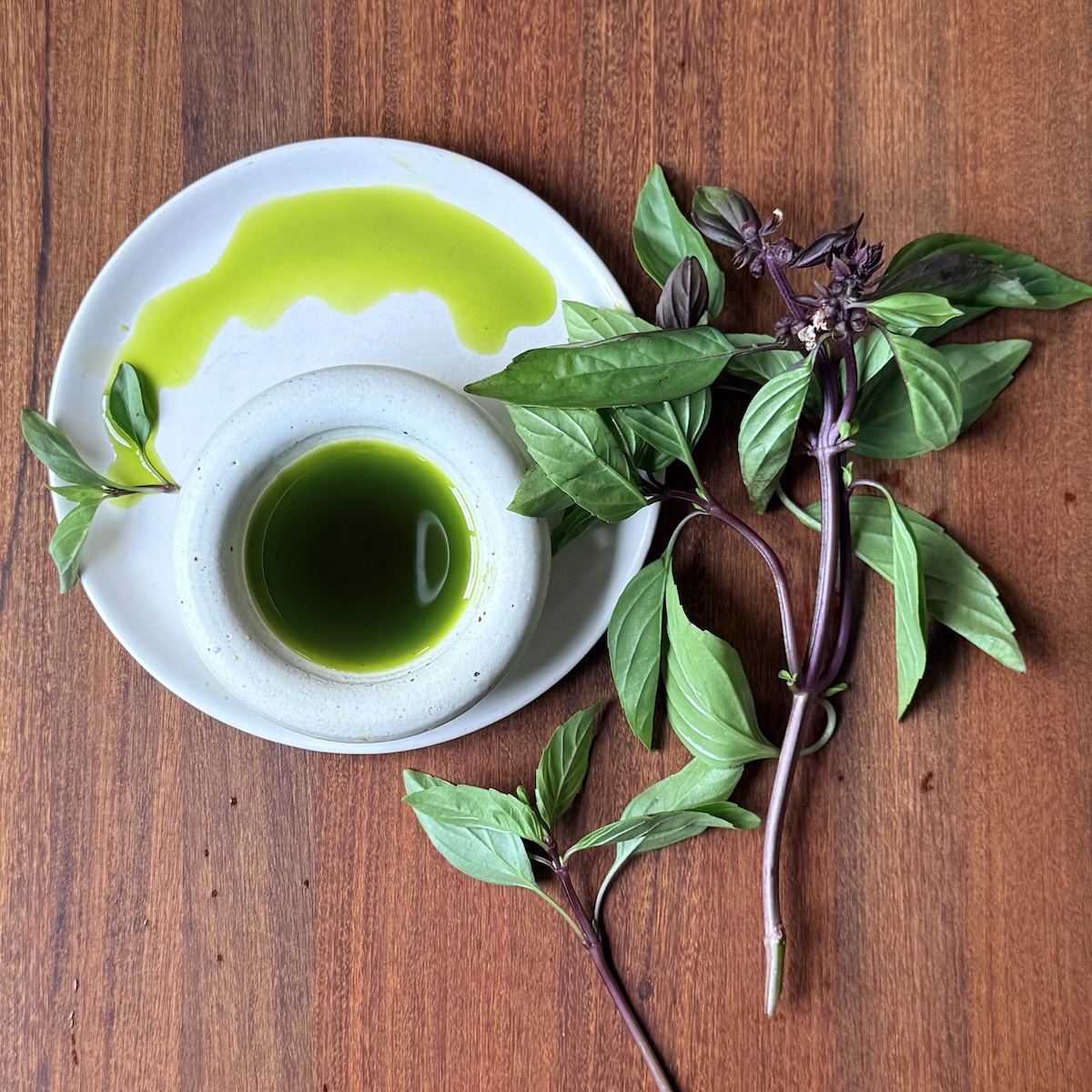
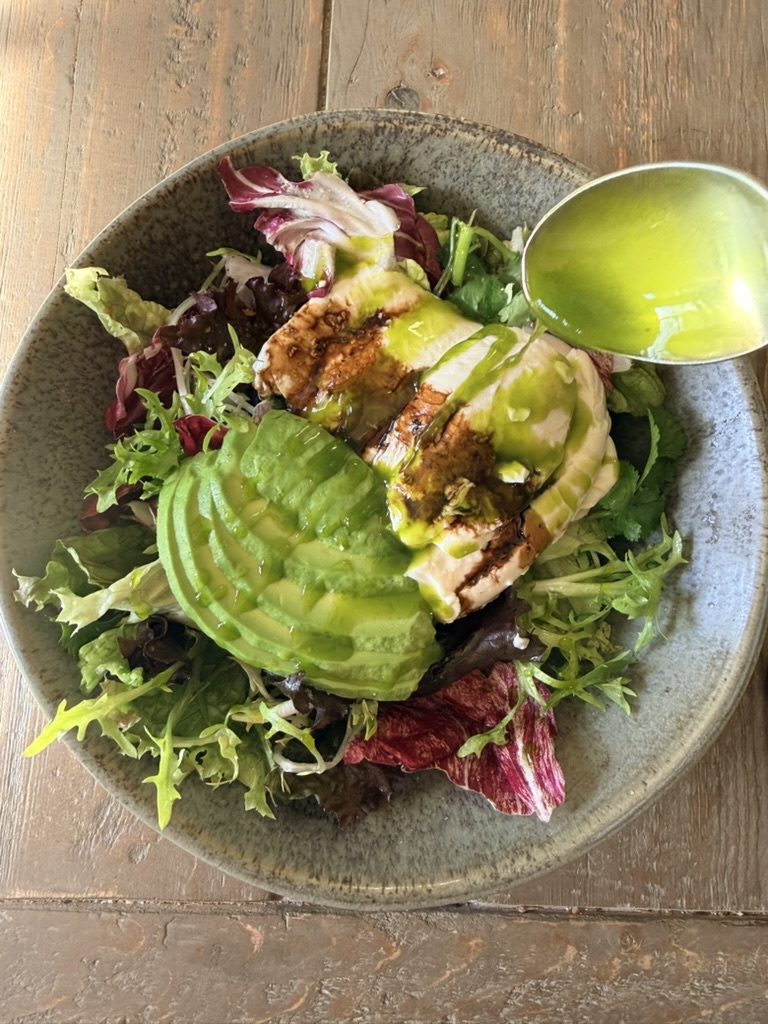
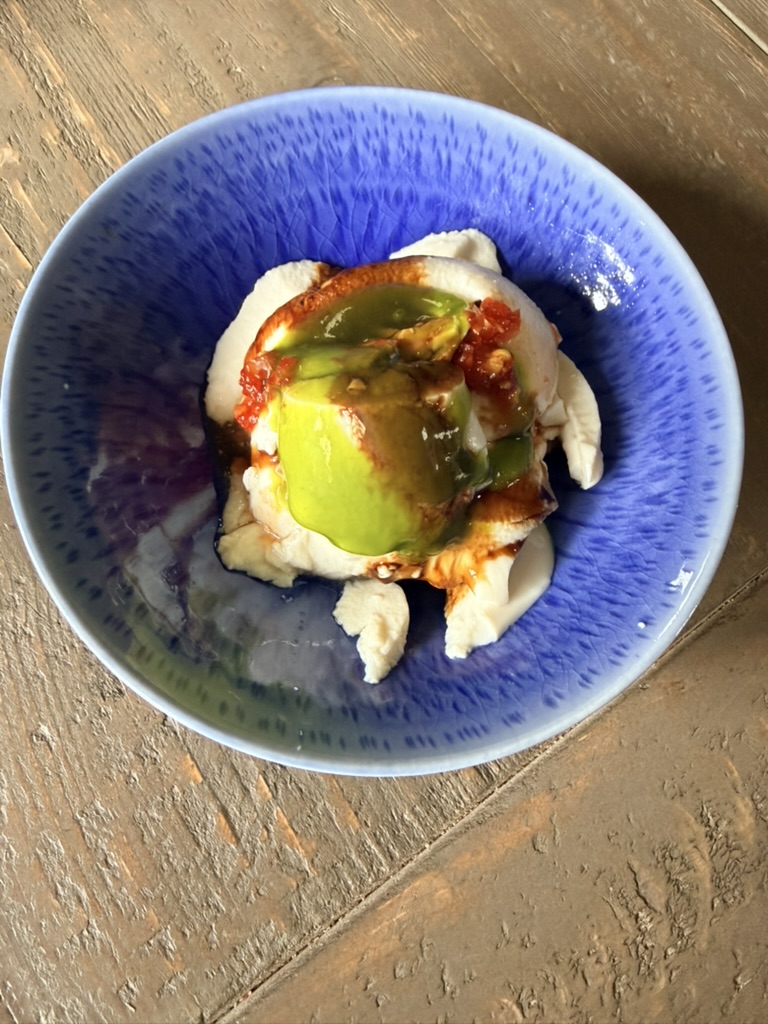
When making herb oils, some people blanch the leaves and then blend them with oil. That oil does not keep as well as this one, which eliminates much, if not all of the moisture, in the basil leaves. The result is beautiful color, thick texture, and basil-ish flavor. I've used the oil to dress salads (below are greens with avocado, tofu, soy sauce, salt and pepper. Drizzle the oil onto scooped up silken tofu and finish with good soy sauce and a few bits of chile garlic sauce and you have what looks like an unusual sundae! Toss warm rice or wheat noodles in the oil too! You could cook with the oil to green up a dish, though the oil, like basil's flavor, would fade quite a lot as it mixes with other ingredients.
Things to consider before diving in
Can you use Italian basil or other herbs? Yes to Italian or other kinds of basil. Yes to other kinds of soft leaf herbs like cilantro or parsley. You are simply making an herb oil.
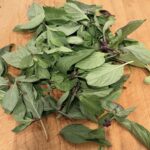
Aim for dry basil leaves with little moisture. If you do that, once blended, the oil does not have to spend too much time over the heat. I quickly rinsed the sprigs, shook off some of the water then pinched off leaves. Not wanting the too much of the purplish color to be in the oil, I separated some of those out. Then I spread the leaves out as one layer on a dish towel and patted them mostly dry. Then I let the leaves sit, uncovered to air dry.
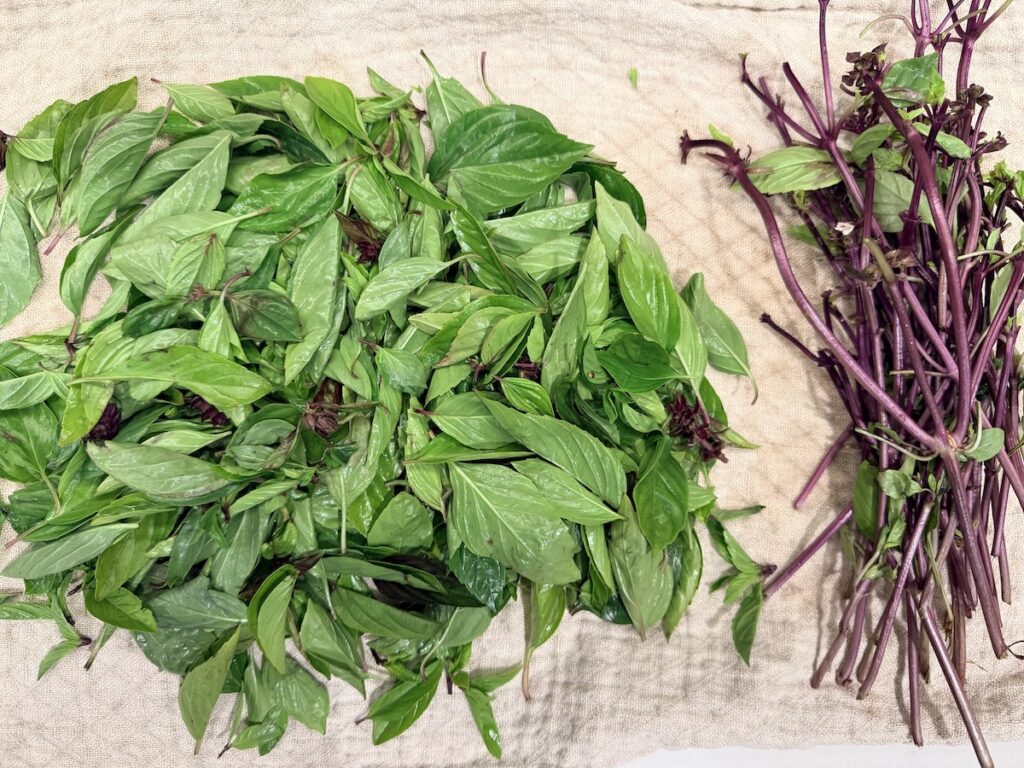
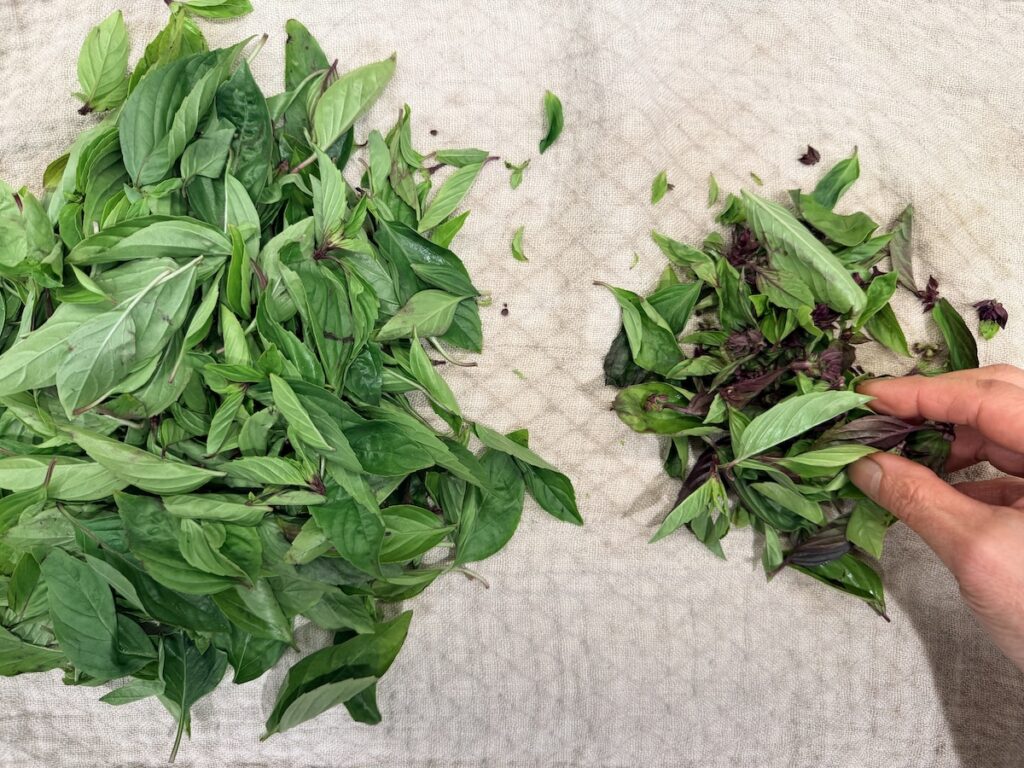
Use a scale to weigh the leaves. Many recipes have a volume measure but I prefer a weight measure for the basil leaves. For each 25 grams of leaves, I used ½ cup (120ml) of oil. You could go up to 30 grams of basil leaves. My measurements here are metric and U.S. standard because it's easier to weigh the basil leaves in grams than ounces.
What kind of oil to use? I used rice bran for its slightly nutty flavor and high smoke point. Refined peanut oil would work well too, as would sunflower or canola oil. Use what you have! There are dregs left of solids and to not waste it, you could put strain it separately in a strainer lined with paper towel, pressing on the solids to expel as much oil as possible. That oil will may have dark bits. Or, let the solids sit and the oil may naturally separate from the dregs and then you can decant the oil.
Thai basil oil video tips
When I first made this herb oil, I was alarmed by initial color. It is not a fail, as you'll see in this video. I thought I'd wasted a bunch of herbs and oil but the ingredients proved me wrong!
As you play with making this oil and using it, do share your experiments so we may learn too. Also, here's how to freeze fresh Thai basil leaves.
Thai Basil Oil
Ingredients
- 50 to 60g Thai basil leaves (see main post for pointers)
- 1 cup (240ml) neutral oil, such as rice bran, peanut, sunflower, or canola
Instructions
- Blend and heat: Put the basil leaves and oil in a blender then whirl until smooth and dark green. Pour and scrape into a small saucepan, the set over medium to medium-low heat. Bring to a gentle simmer, stirring now and then, until the oil goes from olive green to emerald green (watch the video to see the transformation), about 6 minutes. While the oil cooks, get a bowl of ice water ready; use 12 ice cubes and enough water to make them float. Set near where you're working so it will be ready for quickly cooling the strained oil. When the oil has turned emerald green oil, pull it from the heat.
- Strain, cool and strain: Set a fine mesh strainer over a measuring cup then carefully pour the hot oil through. Very gently press on the solids, if you want. Now, put the strained cup of oil into the ice bath. Let sit to cool completely. If you like, restrain the oil through a very fine mesh strainer into a jar. The oil is ready to use or cap it and refrigerate for up to 6 months. Always stir and use a clean spoon to retrieve the oil.
Leave a Reply